Self Propelled Vertical Mast work platform Self Propelled Vertical Mast work platform, 2x12V/100Ah 2x12V/100Ah 2x12V/100Ah. The platform size matches the operator, tools and load carried up.
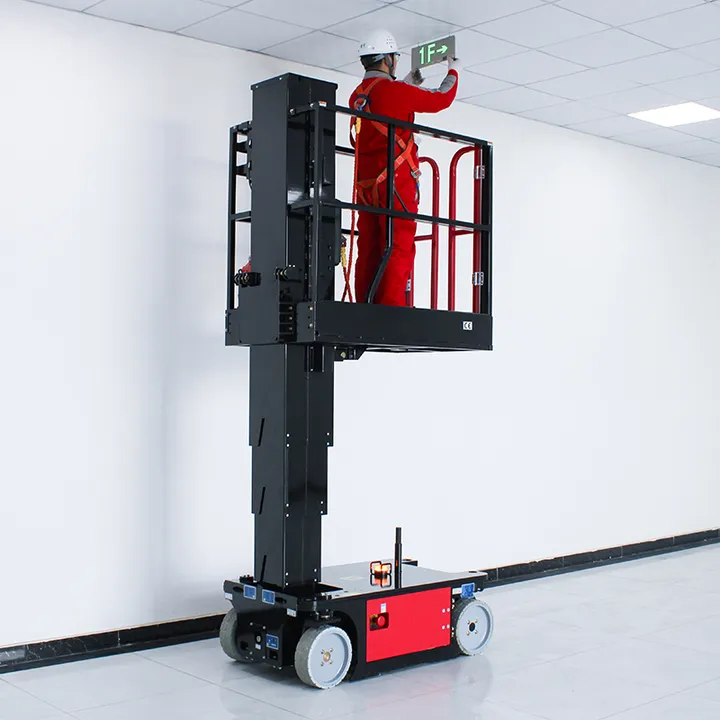
Specification
Table columns, merged cells and units follow the original source record for this model family.
Source table — AMWP3.6-6100 · AMWP4.8-6100 · AMWP6-6100
| Model | AMWP3.6-6100 | AMWP4.8-6100 | AMWP6-6100 |
|---|---|---|---|
| Max. Working Height | 5.60m | 6.80m | 8m |
| Max. Platform Height | 3.60m | 4.80m | 6m |
| Loading Capacity | 227kg | 227kg | 159kg |
| Occupants | (indoor)2/(outdoor)1 | (indoor)2/(outdoor)1 | 114kg |
| Overall Length | 1.36m | 1.36m | 1.36m |
| Overall Width | 0.76m | 0.76m | 0.82m |
| Overall Height | 1.7m | 1.98m | 1.98m |
| Platform Dimension | 1.3mx0.70m | 1.3mx0.70m | 1.28x0.70m |
| Wheel Base | 1.04m | 1.04m | 1.04m |
| Inner Turning Radius | 0.3m | 0.3m | 0.3m |
| Outer Turning Radius | 1.8m | 1.8m | 1.8m |
| Travel Speed(Stowed) | 4km/h | 4km/h | 4km/h |
| Travel Speed(Raised) | 1.1km/h | 1.1km/h | 1.1km/h |
| Up/Down Speed | 48/40sec | 43/35sec | 52/53sec |
| Gradeability | 25% | 25% | 25% |
| Drive Tyres | 305x100mm | 305x100mm | 305x100mm |
| Drive Motors | 2x12VDC/0.5kW | 2x12VDC/0.5kW | 2x12VDC/0.5kW |
| Lifting Motor | 24VDC/1.3kW | 24VDC/1.3kW | 24VDC/1.3kW |
| Battery | 2x12V/100Ah | 2x12V/100Ah | 2x12V/100Ah |
| Charger | 24V/15A | 24V/15A | 24V/15A |
| Weight | 820kg | 980kg | 1060kg |
Self Propelled Vertical Mast work platform Self Propelled Vertical Mast work platform, part of the Aerial work platforms line.
Scissor, boom and vertical-mast platforms plus order-picking trucks for work and picking at height.
Ceiling and pipe access
Published figures for this build: rated capacity 227 kg 227 kg 159, overall width 0.76m 0.76m 0.82m, turning radius 0.3m 0.3m 0.3m, tyre 305x100mm 305x100mm 305x100mm.
Scissor and boom platforms suit positions a ladder cannot reach safely.
Outdoor use depends on ground firmness and wind exposure on site.
Guard rails and a platform replace climbing on racking or frames.
Describe the shifts per day when the power arrangement is selected. Note cold store, outdoor gradient or container entry as a constraint.
The specification sheet records Model: AMWP3.6-6100 / AMWP4.8-6100 / AMWP6-6100; Max. Working Height: 5.60m / 6.80m / 8m; Max. Platform Height: 3.60m / 4.80m / 6m; Loading Capacity: 227 kg 227 kg 159; Occupants (kg): (indoor)2/(outdoor)1 (indoor)2/(outdoor)1 114 kg; Overall Length: 1.36m / 1.36m / 1.36m.
The specification sheet records Overall Width: 0.76m / 0.76m / 0.82m; Overall Height: 1.7m / 1.98m / 1.98m; Platform Dimension: 1.3mx0.70m / 1.3mx0.70m / 1.28x0.70m; Wheel Base: 1.04m / 1.04m / 1.04m; Inner Turning Radius: 0.3m / 0.3m / 0.3m; Outer Turning Radius: 1.8m / 1.8m / 1.8m.
The specification sheet records Travel Speed (Stowed): 4km/h 4km/h 4; Travel Speed (Raised): 1.1km/h 1.1km/h 1.1; Up/Down Speed: 48/40sec 43/35sec 52/53sec; Gradeability: 25% / 25% / 25%; Drive Tyres: 305x100mm / 305x100mm / 305x100mm; Drive Motors: 2x12VDC/0.5kW 2x12VDC/0.5kW 2x12VDC/0.5kW.
The specification sheet records Lifting Motor: 24VDC/1.3kW 24VDC/1.3kW 24VDC/1.3kW; Battery: 2x12V/100Ah 2x12V/100Ah 2x12V/100Ah; Charger: 24V/15A 24V/15A 24V/15A; Weight: 820 kg 980 kg 1060.
Those missing values can be requested directly through the enquiry form.
Each row in the table keeps the label and value from the source record.
An em dash marks a value the source record did not publish.
Options and attachments are listed separately from the base chassis.
Configuration follows the load, working height and site layout.
Door and beam heights decide which mast will clear the route.
The listed figures follow the record; options are confirmed on the quotation.
Check the chassis width against the aisle and the container door.
Review the tyre type against the surface the machine will run on.
Compare the lowered height against the lowest door on the route.
Note any attachment that changes the load centre or the overall width.
On the Self Propelled Vertical Mast work platform, keep the charging or refuelling position clear of the main traffic aisle.
Check the lowest door, beam height and aisle the truck has to pass through.
On the Self Propelled Vertical Mast work platform, mark the stations where loads are picked up and dropped off each shift.
Send photographs of the racking and the existing working area when possible.
On the Self Propelled Vertical Mast work platform, measure the pallet footprint and the heaviest single load before comparing models.
On the Self Propelled Vertical Mast work platform, loads are kept low while travelling between stations.
Unusual noise or movement is reported before further use.
On the Self Propelled Vertical Mast work platform, routine checks cover tyres, brakes, controls and visible leaks.
The working area is kept clear of loose packaging and obstacles.
On the Self Propelled Vertical Mast work platform, spare parts for wear items follow the parts manual after delivery.
Storage cages and racking organise the loads it moves between stations.
On the Self Propelled Vertical Mast work platform, the receiving side pairs it with a dock ramp or platform where needed.
The layout drawing shows where each machine sits in the operation.
On the Self Propelled Vertical Mast work platform, dimensions are checked against the source record before quoting.
Site conditions such as gradient, dust and moisture belong in the enquiry.
On the Self Propelled Vertical Mast work platform, the specification sheet is the binding reference for listed values.
Capacity above the rated lift height follows the mast curve.
On the Self Propelled Vertical Mast work platform, the enquiry should include the quantity and destination port.
Wear parts are supplied after delivery against the parts manual.
On the Self Propelled Vertical Mast work platform, the booking reference is issued with the proforma invoice.
Packing follows sea-freight practice for the chosen chassis.
The parts manual lists the wear items and their reference views.
Ask for the specific certificate required for your target country.
The serial number identifies the build when parts are ordered later.
The published power source for Self Propelled Vertical Mast work platform is 2x12v/100ah 2x12v/100ah 2x12v/100ah; that is the figure to match against the charging or refuelling routine on site.
Figures above are copied from the published specification of each model; where a model does not publish a value it is left out of the comparison rather than estimated.
Questions
The listed power arrangement is 2x12V/100Ah 2x12V/100Ah 2x12V/100Ah. Confirm the supply voltage or fuel type for your site before ordering.
The listed tyre type is 305x100mm. Solid tyres suit sealed concrete; pneumatic tyres suit rough outdoor ground.
The listed turning radius is 0.3m. Aisle width also depends on pallet depth and fork length.
Container entry depends on lowered width, mast height and guard clearance. Compare these with the container door.
The product range is CE marked and the factory holds ISO 9001, ISO 14001 and ISO 18001. The documents issued for a specific order are listed in the quotation.
Many forklift, pallet truck, stacker and reach truck models are held in ready stock; customised units are built in about 25 days. The confirmed date for your order is stated on the proforma invoice.
The machine ships with a parts manual. Wear parts can be ordered after delivery against serial number and part name.
Send load per move, lift height, floor surface, quantity and destination port. The reply lists the matching specification.
Prices are not published. Price follows chassis, mast or lift option, power arrangement, tyres and destination port; send the specification and you receive a line-by-line offer.
Related
Same-family comparison using the published source figures; open a model page for the full specification.
Explore
Send the load per move, the lift height and the floor surface. The sales desk matches the chassis to those figures and replies with a line-by-line offer.
